




CLEAR Lab · Media archive

In the Media

News stories, radio and podcast episodes, talks, and books that feature Dr. Tory Eisenlohr-Moul and the research of the CLEAR Lab on hormones, the menstrual cycle, PMDD, and suicide risk.

About this page. This archive is created and maintained with Claude AI, which finds the coverage and writes the short summaries. Please confirm all content by visiting the original article.

Featured inThe New York Times · The Washington Post · TIME · BBC · CNN · Vox · Scientific American · WNYC · U.S. News · Chicago Tribune

118 mentions · 2014–2026 · last updated 16 November 2026

Coverage by year

Print & onlineRadio & podcastsVideo & talksBooks
05101520251’141’153’162’1719’1810’191’206’2110’2218’2321’248’2514’26
Show as a table
YearPrint & onlineRadio & podcastsVideo & talksBooksTotal
2026712414
202550128
20241410621
20231510218
2022430310
202113026
202010001
2019901010
20181800119
201710012
201630003
201510001
201410001
Group by

Suicide risk and the menstrual cycle

30 items
Talk Brain & Behavior Research Foundation webinar series8 Sep 2026 Dr. E as guest

Hormones, the Brain, and Female Suicide Risk (Meet the Scientist webinar)

A Meet the Scientist webinar in which she presents the CLEAR Lab's double-blind trials showing that stabilizing hormones can prevent perimenstrual spikes in suicidal thinking for some patients. A recording and slides are posted.

Press release Illinois Medicine Magazine (UIC College of Medicine)2026 Lab profiled

Moving the Mood Dial on Hormonal Fluctuations

University magazine profile (Winter 2026 issue) of her CLEAR Lab's work on the menstrual cycle and mental health, covering the global PMDD suicidality study, the adolescent suicide-risk study and the hormone-stabilization trials. She says the evidence points away from a hormone imbalance and toward abnormal brain sensitivity to normal hormone change.

About the study · 17 stories

Our American Journal of Psychiatry paper (Ross et al., 2024) showing that suicidal thoughts and planning rise around menses in many female outpatients with suicidality.

News Vox17 Apr 2024 Dr. E quoted

What science is just starting to understand about periods

Surveys new research on menstruation and health, including the UIC study linking the menstrual cycle to suicide risk. It quotes her, by way of the Chicago Tribune, on how a therapy patient prompted the study, and says her lab is testing treatments from dialectical behavior therapy to hormone-blocking drugs.

News Chicago Tribune5 Apr 2024 Dr. E interviewed

Menstrual cycles can affect day-to-day suicide risk, UIC study finds

Profiles her and Jaclyn Ross and their American Journal of Psychiatry study of 119 patients showing that suicidal ideation and planning peak around menses. She describes the study's clinical origins, says premenstrual sensitivity is a gradient, and describes biomarker work on progesterone sensitivity.

News Thred25 Jan 2024 Dr. E quoted

Menstrual cycle linked with increased suicide risk

Covers the UIC finding that suicidal thoughts and plans cluster around menses onset. Quotes her, as senior author, on clinicians' need to know when patients are most at risk, and on individual differences in which symptoms track suicidality.

News The Independent (via Yahoo News)17 Jan 2024 Dr. E quoted

Day-to-day suicide risk linked to menstrual cycle

Reports the American Journal of Psychiatry study tracking daily suicidal thoughts across the cycle. She is quoted saying the cycle can affect many people with suicidal thoughts and is a rare predictable risk factor.

News The Story Exchange17 Jan 2024 Dr. E quoted

Learn About a New Study on Suicide, Menstruation Ties

Summarises the UIC study on suicidal thoughts peaking around menstruation. Quotes her (from Fast Company) calling the cycle one of the only predictable time-based risk factors for suicide attempts.

News American Psychiatric Association (APA Blogs)20 Dec 2023

The Menstrual Cycle and Mental Health

The APA's summary of the American Journal of Psychiatry study: suicidal thoughts worsened just before menstruation, and hopelessness and perceived burdensomeness predicted suicidal planning.

News UPI (HealthDay)15 Dec 2023 Dr. E quoted

Suicide risk varies during menstrual cycle

HealthDay's story on her team's study of 119 patients showing suicidal thoughts and planning concentrated in the perimenstrual phase. As senior author she says clinicians feel responsible for keeping patients safe but lack information about when to worry most.

News U.S. News & World Report (HealthDay)15 Dec 2023 Dr. E quoted

Suicide Risk May Fluctuate With the Menstrual Cycle

The HealthDay version of the American Journal of Psychiatry suicide-and-cycle study, with depression, anxiety and hopelessness peaking premenstrually for most participants. She is quoted calling the cycle one of the only predictable recurring risk factors for suicide attempts.

News Global News (Canada)15 Dec 2023 Dr. E quotedNew

Menstrual cycles could help predict suicide risk, new research suggests

Canadian national coverage of the American Journal of Psychiatry study finding that suicidal thoughts and planning rise around menses for many outpatients. Co-lead author Jordan Barone is interviewed, and Dr. Eisenlohr-Moul is quoted that clinicians feel responsible for keeping patients safe.

Press release UIC Today14 Dec 2023 Dr. E quoted

Menstrual cycles affect day-to-day suicide risk, UIC researchers find

University press release on her lab's first longitudinal study of suicidal thoughts across the menstrual cycle in female outpatients. She says the findings make the cycle a predictable recurring risk factor and that clinicians should consider it when assessing suicidality.

News Psychiatric News Alert (American Psychiatric Association)14 Dec 2023

Suicidal Symptoms May Worsen for Some Women Before, During Menses

Reports the study of 119 outpatients with recent suicidal ideation, which found that suicidal symptoms worsened before and during menses for many participants and that the pattern varied from person to person.

News Fast CompanyDec 2023 Dr. E interviewed

Study: Menstrual cycle linked with increased suicide risk

Reports the UIC study finding suicidal thoughts, plans and actions most frequent just before or as bleeding begins, with PMDD absent in about 60% of cases. She told Fast Company the cycle is one of the only predictable time-based risk factors for suicide attempts.

News Scripps News (syndicated to Scripps local TV stations, e.g. WMAR-2 Baltimore, WCPO, Denver7, Fox13)Date unknown Co-author interviewed

New study shows menstrual cycles may affect suicide risk

Broadcast story on the finding that suicidal ideation and planning peak in the days just before and after the start of menstrual bleeding. Co-lead authors Jordan Barone and Jaclyn Ross were interviewed; it also aired on Scripps local stations.

About the study · 1 story

Owens et al. (2023, Journal of Psychopathology and Clinical Science), “Cyclical exacerbation of suicidal ideation in female outpatients: Prospective evidence from daily ratings in a transdiagnostic sample.” Dr. Eisenlohr-Moul is a co-author.

About the study · 4 stories

Our global study of suicidal thoughts and behaviours in people with prospectively diagnosed PMDD (Eisenlohr-Moul et al., 2022, BMC Psychiatry).

Radio The Brian Lehrer Show (WNYC)27 Jul 2022 Dr. E as guest

The Toll Premenstrual Dysphoric Disorder Takes

A live call-in segment in which she discusses new research on elevated suicide risk in PMDD, introduced as IAPMD Clinical Advisory Board chair. Listeners with PMDD call in.

News Medbound Times14 Jun 2022 Dr. E quoted

Suicidal tendencies may be due to hormone-sensitive brain disorder

Reports her BMC Psychiatry study finding 34% lifetime suicide attempts among 599 people with prospectively diagnosed PMDD. She says the rates are extremely worrying and that the PMDD-suicide link is independent of depression and PTSD.

Press release UIC Today13 Jun 2022 Dr. E quoted

Suicidal thoughts, behaviors linked to hormone-sensitive brain disorder

University press release on her global study of suicidal thoughts and behaviors in 599 patients with PMDD diagnosed from daily ratings. She calls it strong evidence that PMDD contributes to suicidality independently and criticises dismissal of PMDD by providers.

About the study · 4 stories

Our NIMH-funded trials testing whether stabilizing estradiol and progesterone around menses prevents perimenstrual depression and suicidal thinking.

Press release UIC Today5 Aug 2019 Dr. E quoted

Seeking biomarkers that may predict suicide risk among women

University release announcing her four-year, $3.1 million NIMH grant for a 90-participant trial of perimenstrual estradiol and progesterone stabilization in suicidal women. It describes her earlier finding that hormone stabilization protected against perimenstrual depression and suicidal thoughts.

News Chicago Sun-Times8 Jun 2018 Dr. E quoted

For women, the stigma of depression, anxiety can become too much to bear

A piece on depression, stigma and suicide among women. She discusses midlife hormone change and stress as risk factors, and her research showing hormone stabilization reduces depression and suicidal thoughts, backed by a $750,000 NIH grant.

Press release UIC Today4 Jun 2018 Dr. E quoted

Does stabilizing female hormones help lower suicide risk?

University release on her $750,000 NIMH grant to test perimenstrual estradiol versus progesterone stabilization in 30 suicidal women. She explains that both hormones are usually linked with well-being and that stabilizing them prevented perimenstrual worsening in prior work.

PMDD and premenstrual exacerbation

40 items
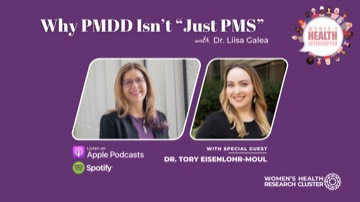
Podcast Women's Health Interrupted (Women's Health Research Cluster podcast)15 Oct 2026 Dr. E as guestNew

Why PMDD Isn’t “Just PMS”: A Deep Dive with Dr. Tory Eisenlohr‑Moul

A season 4 episode on what PMDD is and why it is not a simple one-to-one disorder. She explains how hormone sensitivity, ovulation and timing shape symptoms across the cycle, why current diagnostic criteria miss many people, and why menstrual-cycle research has been overlooked.

About the study · 4 stories

Reilly et al. (2024, Journal of Affective Disorders), “The prevalence of premenstrual dysphoric disorder: Systematic review and meta-analysis.” Dr. Eisenlohr-Moul is a co-author.

Magazine The Cut (New York Magazine)25 Sep 2026

Me, My Husband, and My PMDD

Robyn Huang's first-person essay on how PMDD, diagnosed after years of premenstrual blowups, reshaped her marriage. It cites the PMDD prevalence meta-analysis she co-authored for the figure that about 3 percent of people who menstruate have PMDD.

News King's College London News22 Apr 2026 New

How Interdisciplinary, Policy-Led Research Can Help Us Move Towards Better Outcomes for Premenstrual Dysphoric Disorder (PMDD)

Introduces a King's College London collaboration joining lived experience, clinical science and policy work to improve PMDD diagnosis and care in the UK. It draws on her 2019 primer on premenstrual disorders and on the Reilly et al. (2024) prevalence meta-analysis she co-authored for its account of PMDD and its 1-in-20 estimate.

Book Laura Elizabeth Woollett2026 · Scribe Publications Dr. E interviewed

Hell Days: Into the Inferno of Hormonal Mood Disorder

An Australian novelist's account of her own PMDD that combines memoir, true crime and expert interviews. Woollett interviews her and quotes her criticism of the DSM-5 criteria for PMDD.

Book Mary Ryan2026 · Gill Books

It's Probably Your Period

An Irish guide to the menstrual cycle across the lifespan. Its chapter on the 'period blues' cites her 2022 study of suicidality in PMDD.

Talk Women's Health Research Cluster speaker series, Toronto (YouTube)20 Oct 2025 Dr. E as guest

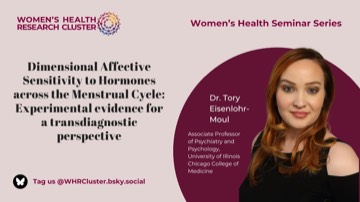
Dimensional Affective Sensitivity to Hormones across the Menstrual Cycle: Experimental evidence for a transdiagnostic perspective

A recorded talk for the Toronto-based Women's Health Research Cluster, arguing that sensitivity to hormones is a dimension that cuts across diagnoses rather than being limited to PMDD. She presents experimental evidence on affective sensitivity to cycle-related hormone change.

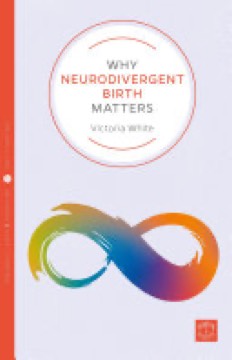
Book Victoria White2025 · Pinter & Martin

Why Neurodivergent Birth Matters

A book on pregnancy and birth for autistic and other neurodivergent people. It cites her 2022 work on premenstrual symptoms.

Magazine SELF21 Jun 2024 Dr. E quoted

Yes, Your Period Can Make Your Depression Worse. Here's Why—And How To Cope

Explains premenstrual exacerbation of depression and how to get care for it. She says affected brains appear unusually sensitive to normal estrogen and progesterone drops, argues the PMDD diagnosis should be updated to cover people with chronic symptoms, and advises finding any receptive clinician.

Magazine TIME4 Apr 2024 Dr. E quoted

The Menstrual Mood Disorder You've Never Heard About

Shalene Gupta's essay on PMDD and the history of backlash against the diagnosis. She estimates the backlash set PMDD care back 10 to 15 years and describes a "chilling effect" that makes doctors reluctant to raise the topic.

Book Shalene Gupta2024 · Flatiron Books Dr. E interviewed

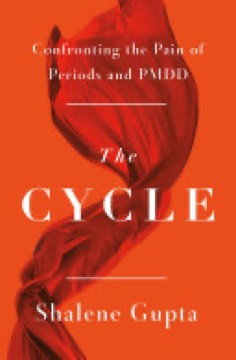
The Cycle: Confronting the Pain of Periods and PMDD

A journalist's memoir and reported history of PMDD. Gupta interviewed her repeatedly and describes visiting the CLEAR Lab while researching the book.

Book Estrella Montoya2024 · Singel Uitgeverijen

Hormonen en vrouwen

A Dutch popular-science book by a neuroscientist on hormones, the brain and emotion in women. It cites her 2022 global study of self-injurious thoughts and behaviours in PMDD.

About the study · 2 stories

APA's Speaking of Psychology episode featuring Dr. E, and the Monitor on Psychology article that accompanied it.

Podcast Speaking of Psychology (American Psychological Association)6 Sep 2023 Dr. E as guest

How hormones and the menstrual cycle affect mental health (Episode 252)

An interview on how hormones and the cycle interact with mental health. She explains why premenstrual symptoms are not a hormone imbalance, reviews treatments, and covers PMDD and suicidality.

Magazine Monitor on Psychology (APA)1 Sep 2023 Dr. E interviewed

Why are some people more susceptible to severe PMS? Psychologists seek answers

Reviews the emerging science on PMDD and hormone sensitivity for practising psychologists. She explains that abnormal sensitivity to normal hormone fluctuation drives PMDD and related problems, and says psychologists should know more about it.

Press release UIC Today21 Jun 2023

A guide to treating premenstrual dysphoric disorder

Research brief on a UIC paper about managing severe, treatment-resistant PMDD (including hormone suppression approaches). She is listed among the College of Medicine authors.

Book Kate Clancy2023 · Princeton University Press Dr. E quoted

Period: The Real Story of Menstruation

An anthropologist's book for general readers on the science and politics of menstruation. It quotes her on PMDD and trauma and describes her lab's findings on when PMDD symptoms occur.

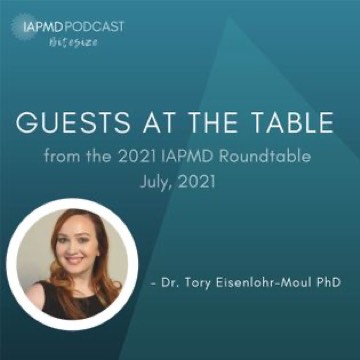
Podcast IAPMD podcast (Acast)2 Jan 2022 Dr. E as guest

Guests at The Table

An episode built around the July 2021 PMDD Roundtable of patients and professionals. It features her opening remarks, as Clinical Advisory Board chair, on patient-centred outcomes in PMDD research.

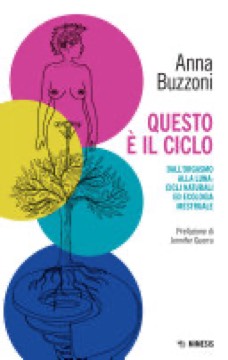
Book Anna Buzzoni2022 · Mimesis

Questo è il ciclo

An Italian popular book on the menstrual cycle. It cites her primer on premenstrual disorders for psychologists.

Radio The Lisa Show (BYU Radio)3 Nov 2021 Dr. E as guest

PMDD: what it is and how to support those with it

A 15-minute radio interview explaining PMDD and its relatively recent entry into the DSM-5. She explains how family and friends can support someone with the disorder.

News The Signal (University of King's College, Halifax)7 Apr 2021 Dr. E interviewedNew

Halifax woman’s non-profit offers support for people with premenstrual disorders

Profiles the Halifax founder of IAPMD and the peer support the organization offers people with PMDD and PME. Dr. Eisenlohr-Moul, then chair of IAPMD's Clinical Advisory Board, explains PMDD as "an abnormal response to normal hormone changes."

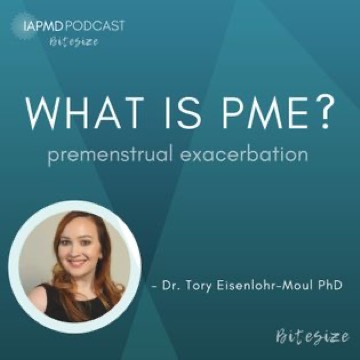
Podcast IAPMD podcast (Acast)21 Feb 2021 Dr. E as guest

What Is PME? A bitesize overview

A short episode in which she explains premenstrual exacerbation of an underlying disorder and how it differs from PMDD.

Podcast IAPMD podcast (Acast)30 Jan 2021 Dr. E as guest

What Is PMDD? A bitesize overview

The first IAPMD Bitesize episode, a basic overview of premenstrual dysphoric disorder given by her as Clinical Advisory Board chair.

Magazine BBC Future16 Dec 2019 Dr. E interviewed

The overlooked condition that can trigger extreme behaviour

Explores PMDD, its frequent misdiagnosis and its contested use in criminal law. She calls PMDD a cellular genetic malfunction in response to hormone change, stresses that most women have no cyclical changes, and describes two months of daily ratings for diagnosis and her app to track it.

News VICE28 Oct 2019 Dr. E interviewed

The 'Severest Form of PMS' Could Finally Get a Treatment

Covers sepranolone, an allopregnanolone blocker in trials for PMDD. As IAPMD clinical advisory board chair, she calls the trials really promising and explains that PMDD reflects an abnormal brain reaction to normal hormone changes.

Magazine Romper30 Sep 2019 Dr. E interviewed

The Surprising Things Your Period Can Tell You About Your Mental Health

Explains how menstrual cycles relate to mood, PMS, PMDD and PME. She says most women's periods do not affect their mental health but a large minority have significant changes, and advises two cycles of symptom tracking and finding a doctor who believes you.

About the study · 2 stories

The C-PASS, our standardized system for diagnosing PMDD from daily symptom ratings.

News Psychiatric News (APA)Sep 2016 Dr. E interviewed

Standardized Scoring System Developed for Premenstrual Dysphoric Disorder

Reports her development of the Carolina Premenstrual Assessment Scoring System (C-PASS) for standardized DSM-5 PMDD diagnosis from daily ratings. As a UNC postdoctoral fellow, she explains why retrospective symptom reports are unreliable for PMDD.

Video IAPMD (Facebook video)Date unknown Dr. E as guest

Meeting Dr Tory Eisenlohr-Moul

A recorded conversation with IAPMD's Director of Education and Awareness about her work.

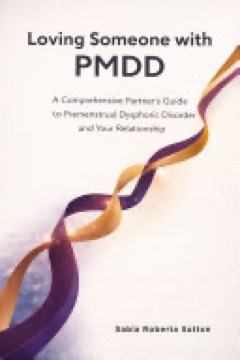
Book Sabia Roberta SuttonDate unknown · self-published

Loving Someone with PMDD

A self-published guide for partners of people with PMDD. It cites her 2017 paper on diagnosing PMDD and the C-PASS scoring system.
ADHD and the cycle

9 items

About the study · 1 story

Roberts et al. (2018, Psychoneuroendocrinology), “Reproductive steroids and ADHD symptoms across the menstrual cycle.” Dr. Eisenlohr-Moul is a co-author.

Magazine Clue (Ask the Experts, Clue Science Team)30 Oct 2026 New

Why is my ADHD worse before my period?

An expert Q&A from the Clue period-tracking app's science team on why ADHD symptoms can feel worse before a period and how to raise this with a prescriber. It cites the Roberts, Eisenlohr-Moul and Martel (2018) study of reproductive steroids and ADHD symptoms across the menstrual cycle as part of its evidence.

Magazine Psychology Today (blog)31 Aug 2026

Why Is My ADHD Worse Before My Period?

A psychotherapist explains why ADHD symptoms can worsen premenstrually, citing her 2018 study with Roberts and Martel on reproductive steroids and ADHD symptoms across the cycle.

Magazine ADDitude29 Jan 2026

Negative Mood, ADHD Symptoms Intensify with Menstruation: Study

Reports a study finding that ADHD symptoms and negative mood peak during menstruation and that women do not adjust medication across the cycle. The article cites her 2018 study with Roberts and Martel as earlier work that measured ovarian hormones directly, which the new study did not.

About the study · 2 stories

Preliminary data from our R01 with Michelle Martel (University of Kentucky) on ADHD symptoms across the menstrual cycle, which replicated and extended our earlier smaller study.

Magazine The Cut (New York Magazine)3 Jun 2025

How the Menstrual Cycle Affects ADHD

A feature on how cyclical estrogen changes may worsen ADHD symptoms and blunt stimulant medication premenstrually, drawing on the CLEAR Lab's ADHD-and-cycle work with Michelle Martel.

Magazine ADDitude27 May 2025 New

Sex Hormones in Women Impact ADHD Symptoms, Medication Efficacy: Study

Covers a systematic review of how estrogen and progesterone shape ADHD symptoms and stimulant response in women. The piece draws on the lab's work with Michelle Martel, citing Roberts et al. (2018) on luteal-phase impulsivity and Eng et al. (2024) on ADHD and the menstrual cycle.

About the study · 1 story

Eng et al. (2023, Research on Child and Adolescent Psychopathology), “Aging and Pubertal Development Differentially Predict Symptoms of ADHD, Depression, and Impairment in Children and Adolescents: An Eight-Year Longitudinal Study.” Dr. Eisenlohr-Moul is a co-author.

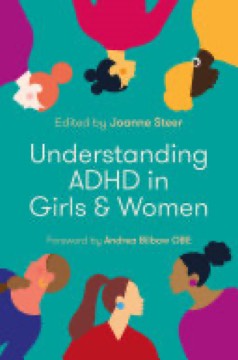
Book Joanne Steer (ed.)2021 · Jessica Kingsley Publishers

Understanding ADHD in Girls and Women

A book for parents, women and professionals on ADHD in females. It cites her 2018 work with Martel on cyclical changes in ADHD symptoms.

Borderline personality disorder

6 items

About the study · 1 story

Peters et al. (2020, Aggressive Behavior), “Differential effects of the menstrual cycle on reactive and proactive aggression in borderline personality disorder.” Dr. Eisenlohr-Moul is a co-author.

About the study · 5 stories

Our study showing that borderline personality disorder symptoms worsen around menses (Eisenlohr-Moul et al., 2018, Psychological Medicine).

News Healio Psychiatry12 Jun 2018 Dr. E quoted

Menstruation may worsen symptoms in borderline personality disorder

Reports her Psychological Medicine study showing borderline personality disorder symptoms worsen perimenstrually in a 35-day daily-rating sample. She notes that tools to predict symptom changes are very useful given high suicide risk in BPD.

Perimenopause and menopause

15 items
Book Evelyn K. Harper2026 · eBookIt.com

Emotional Side of Perimenopause

A self-published guide to mood during perimenopause. It cites her 2023 paper on life stress, hormone fluctuation and mood in peripubertal girls.

Book Kristin Johnson & Maria Claps2024 · Fair Winds Press

The Great Menopause Myth

A popular guide to perimenopause and menopause. It cites the 2018 JAMA Psychiatry trial of transdermal estradiol for preventing perimenopausal depression, which she coauthored.

Book Heather Hirsch, MD2023 · St. Martin's Essentials

Unlock Your Menopause Type

A menopause physician's consumer guide. It cites the mindfulness-based stress reduction trial for preventing perimenopausal depression, which she coauthored.

About the study · 1 story

Gordon et al. (2020, Psychological Medicine), “Mood sensitivity to estradiol predicts depressive symptoms in the menopause transition.” Dr. Eisenlohr-Moul is a co-author.

Magazine Saskatchewan Health Research Foundation (co-published in University of Regina Discourse Magazine)1 Feb 2022

Mood and the menopause transition

A feature on Jennifer Gordon's work showing that 39% of women had negative mood changes when their estradiol changed, the finding of the estradiol-sensitivity paper.

Book Lara Briden2021 · Greenpeak Publishing

Hormone Repair Manual

A popular guide to perimenopause. Its section on progesterone sensitivity names her concept of 'neurosteroid change sensitivity'.

About the study · 8 stories

Gordon et al. (2018, JAMA Psychiatry), “Efficacy of Transdermal Estradiol and Micronized Progesterone in the Prevention of Depressive Symptoms in the Menopause Transition.” Dr. Eisenlohr-Moul is a co-author.

News Medical News Bulletin27 Feb 2018

HRT Staves Off Depression during Menopause

Summarizes the trial's findings and subgroup results: more benefit early in the menopause transition and after stressful life events.

News HealthDay News10 Jan 2018

Hormone Therapy May Ease Depression Linked to Menopause

Reports the trial of 172 women aged 45 to 60, in which a year of the estrogen patch cut clinically significant depressive symptoms from about 32% to 17%. Co-author Susan Girdler is quoted.

Magazine Degrees Magazine (University of Regina)2018

Depression and the menopause transition

Feature on the JAMA Psychiatry trial: 17% of women on estrogen patches developed depression against 32% on placebo. First author Jennifer Gordon is quoted.

About the study · 1 story

Gordon et al. (2015, Menopause), “Estradiol variability, stressful life events, and the emergence of depressive symptomatology during the menopausal transition.” Dr. Eisenlohr-Moul is a co-author.

Hormones, myths and everyday life

11 items
Magazine Vogue28 Jan 2025 Dr. E quoted

Should You Be Traveling According to Your Menstrual Cycle?

Considers whether planning trips around menstrual cycle phases (cycle syncing) makes sense. She cautions that researchers are still learning how the cycle affects different people and recommends first tracking your own patterns.

Book Sally King2025 · Policy Press

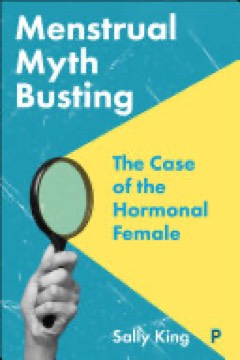
Menstrual Myth Busting: The Case of the Hormonal Female

A scholarly book for general readers that challenges the 'hormonal female' stereotype. It cites her 2020 paper with Mendle on evolution and theoretical overreach, along with IAPMD materials.

Magazine TIME19 Sep 2023 Dr. E quoted

Cycle Syncing Won't Fix Women's Fitness

Examines the thin evidence behind cycle-syncing diet and exercise programs. She warns these programs feed the idea that all females are driven by hormones, notes that stress and sleep often matter more, and cautions against compulsive rule-following.

About the study · 1 story

Kiesner et al. (2023, The Journal of Sexual Medicine), “Menstrual cycle–driven vs noncyclical daily changes in sexual desire.” Dr. Eisenlohr-Moul is a co-author.

News Sexual Medicine Society of North America (SMSNA patient news / SexHealthMatters)25 Jul 2023

Does the Menstrual Cycle Impact Sexual Desire?

Summarizes the Kiesner et al. study of 213 students: desire rose slightly at midcycle on average, but some women peaked midcycle, some perimenstrually and some not at all, and psychological changes outweighed physical ones.

Book Le'Nise Brothers2022 · Watkins

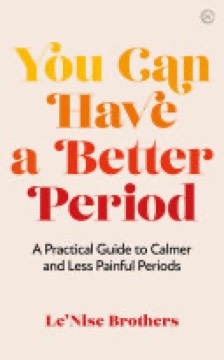
You Can Have a Better Period

A nutritionist's self-help guide to period health. It cites her 2020 meta-analysis with Pinna on cortisol across the cycle.

Magazine The Cut (New York Magazine)17 Jun 2019 Dr. E quoted

Why Women Are Going Off Birth Control Pills

Examines why many women are stopping hormonal contraception and how the pill affects mood. She says the medical community has not explored individual differences in some women's mood responses to hormones.

News The New York Times30 May 2019 Dr. E quoted

Fighting the Gender Stereotypes That Warp Biomedical Research

Covers the argument that the stereotype of 'hormonal' females distorts animal research design. She says basic animal studies shape human trials, which drugs reach market, and whether sex differences in drug effects are ever checked.

News CNN3 Oct 2018 Dr. E quoted

Paid period leave policy in Australia stirs world debate

Explainer on an Australian women's group's paid menstrual leave policy and the global debate it triggered. She describes the polarised debate over menstrual symptoms and says the synthesis between the two positions often gets lost.

Book Natasha Devon2018 · Pan Macmillan Dr. E interviewed

A Beginner's Guide to Being Mental: An A-Z

A British mental-health campaigner's A-to-Z for general readers. It recounts what she told the author about hormone sensitivity and thanks her in the acknowledgments.

Magazine Women's Health27 Jul 2017 Dr. E interviewed

The Truth About Whether 'Period Brain' Really Exists

Covers a study finding that cyclical hormone change does not impair most women's cognition. She says the study shows most women do not have trouble thinking because of the cycle, but notes that women with PMDD can have cognitive changes that affect work and relationships.

Other research

7 items

About the study · 2 stories

Our study of alcohol use and drinking motives across hormonally confirmed cycle phases (Barone et al.).

News Inverse27 Mar 2023 Dr. E interviewed

Your Menstrual Cycle May Be Influencing Your Drinking Habits

Reports her lab's study (first author Jordan Barone) of alcohol use and drinking motives across hormonally confirmed cycle phases in suicidal outpatients. She attributes earlier mixed findings to small samples, healthy volunteers and error in pinpointing ovulation.

Book Rachel Goldsmith Turow2022 · Shambhala

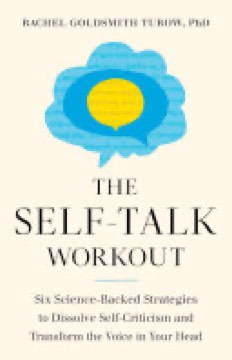
The Self-Talk Workout

A self-help book on self-criticism. It cites the 2013 Mindfulness paper comparing sitting meditation, body scan and yoga, which she coauthored.


Book Shuvendu Sen2017 · Simon & Schuster

Why Buddha Never Had Alzheimer's

A popular book on lifestyle approaches to dementia. It cites the Gordon et al. paper on estradiol variability, stressful life events and depression, which she coauthored.

About the study · 1 story

The 2016 Clinical Psychological Science special series on reproductive mental health, from menarche to menopause, which Dr. Eisenlohr-Moul co-edited with Jane Mendle and Jeff Kiesner.

About the study · 1 story

Sauer-Zavala et al. (2012, Mindfulness), “Comparing Mindfulness-Based Intervention Strategies: Differential Effects of Sitting Meditation, Body Scan, and Mindful Yoga.” Dr. Eisenlohr-Moul is a co-author.

Magazine Greater Good Magazine (UC Berkeley)21 Apr 2014

Which Kind of Mindfulness Meditation is Right for You?

Describes the Mindfulness study that assigned 141 undergraduates to sitting meditation, body scan or mindful yoga, finding the largest well-being gains with yoga.

About the study · 1 story

Miller et al. (2019, Journal of Child Psychology and Psychiatry), “Does higher-than-usual stress predict nonsuicidal self-injury? Evidence from two prospective studies in adolescent and emerging adult females.” Dr. Eisenlohr-Moul is a co-author.